




Product-Market Fit: The One Thing That Separates Startups That Survive From Those That Don’t
A deep-research guide with real company examples, frameworks, and actionable signals — written for founders who are still searching or want to know if they’ve found it.
In 2007, Marc Andreessen published a blog post that changed how founders think about building companies. His argument was simple: the only thing that matters in a startup’s early life is product-market fit. Not the team, not the technology, not the pitch deck. PMF.
More than a decade later, CB Insights studied 101 startup post-mortems and found that 42% failed because there was no market need for what they built. Not bad execution. Not poor timing. They built something nobody actually wanted.
This guide is for the founder who wants to avoid that fate and who wants the research, the frameworks, and the real examples to navigate the search for PMF intelligently.
What product-market fit actually means
PMF is when a specific group of people urgently want your product not because you told them to, but because it solves a real, painful problem in their lives. The market pulls the product out of you.
“You can always feel when product market fit isn’t happening. The customers aren’t quite getting value out of the product, word of mouth isn’t spreading, usage isn’t growing fast enough… And you can always feel product-market fit when it’s happening.” : Marc Andreessen
The academic framing of PMF comes from Everett Rogers’ diffusion of innovation theory (1962), which describes how products cross from early adopters into mainstream markets. PMF is the moment you’ve found the early adopter segment so well-served that crossing that chasm becomes plausible.
The research behind the 40% benchmark
In 2010, Sean Ellis the growth advisor who scaled Dropbox and Eventbrite surveyed thousands of startup users with one question:
“How would you feel if you could no longer use this product?”
He found a clean threshold: if 40% or more of your users say ‘very disappointed,’ you have product-market fit. Below that, you don’t and you shouldn’t be scaling.
| 40%+ Users ‘very disappointed’ = PMF signal | 42% Startups fail from no market need (CB Insights) | 3-5x Higher growth rate after finding PMF (a16z research) | <18mo Median time to PMF for successful B2B startups |
A 2021 study by First Round Capital found that founders who could clearly articulate their customer’s problem before building were 2.4x more likely to find PMF within 18 months. Talking to customers is not optional it is the process.
Five real companies and how they found it
| Slack | Found PMF in 2013 Originally built as an internal tool for a gaming company called Glitch, Slack was never meant to be a product. When Glitch failed, the team noticed they couldn’t work without their internal messaging tool. They launched it to the public and 8,000 companies signed up on day one. The product already had a proven user who desperately needed it: themselves. Within 24 hours of launch, they had validated demand without a single ad. |
| Dropbox | Found PMF in 2008 Before writing a line of production code, Drew Houston made a 3-minute demo video explaining what Dropbox would do. Overnight, the waiting list went from 5,000 to 75,000 signups. This is now taught in business schools as a textbook PMF test: validate demand before you build. The pain (losing files, emailing yourself documents) was so universal that the video alone was proof enough. |
| Airbnb | Found PMF in 2009 In the early days, Airbnb wasn’t growing. Paul Graham told them to go to New York, meet their hosts, and actually see what was happening. The founders found that listing photos were terrible shot on phones, dark and unappealing. They rented a camera and personally photographed listings. Revenue doubled that week. PMF wasn’t a product problem. It was a trust problem. Founders who leave the building find answers that dashboards never show. |
| WhatsApp | Found PMF in 2009 WhatsApp launched in a market dominated by SMS a product people were already paying for. But SMS was expensive (especially internationally), carrier-controlled, and had no read receipts. WhatsApp was free, worked over Wi-Fi, and showed you when a message was read. The product didn’t create a new behavior it improved an existing one dramatically. This is the most reliable path to PMF: take something people already do and make it 10x better or cheaper. |
| Spotify | Found PMF in 2008 The music industry said streaming would never work. Spotify proved PMF by targeting a very specific user: someone who was already pirating music via Napster or BitTorrent and hated the guilt and risk. Spotify didn’t fight piracy with policy it gave those users a better, legal alternative at a price point they could accept. PMF came from understanding the workaround users had already invented, and building a legitimate version of it. |
The PMF journey: a stage-by-stage framework
| Stage | What you’re doing | Signal to watch |
| Problem discovery | Talk to 50+ potential users. Find the problem that makes them lean forward in their seat. | Emotional language, repeated pain |
| Solution validation | Show mockups or prototypes. Can people immediately understand and want it? | Someone tries to buy it in the meeting |
| Early traction | Get 10 users who love the product. Ignore the 90 who are lukewarm. | Unsolicited referrals start appearing |
| Retention test | Do users come back without being pushed? Check week-2 and week-4 retention. | Retention curve flattens (doesn’t hit zero) |
| PMF confirmed | 40%+ very disappointed score. NPS > 40. Organic growth > paid growth. | You can’t keep up with demand |
What kills companies before PMF
Scaling before finding it
The most common fatal mistake. Hiring a sales team, running ads, or raising a Series A before you’ve confirmed that users genuinely need your product just means you burn money faster. Sequoia’s research on failed portfolio companies shows that premature scaling is the most common cause of startup death more than competition or product failure.
Mistaking activity for traction
High signups, press coverage, and busy dashboards create the illusion of PMF. But if users aren’t returning in week two, you don’t have it. Andrew Chen at a16z calls this the ‘zombie startup’ it looks alive but isn’t growing on its own.
Building for the wrong segment
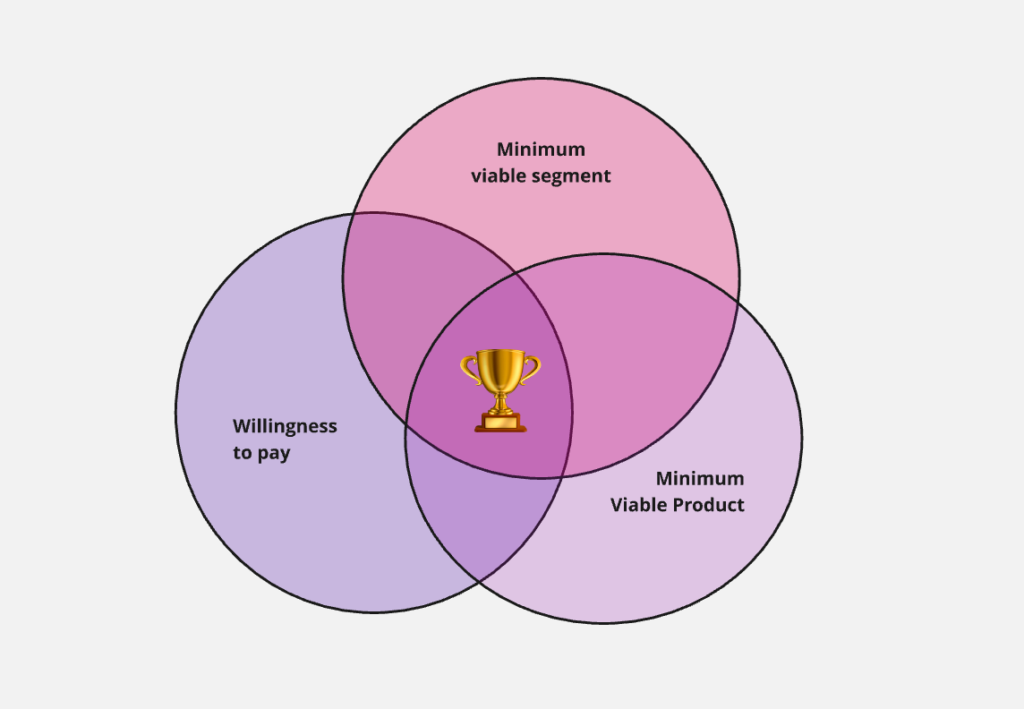
A product can have PMF with a narrow segment and none with a broader one. Notion had tremendous PMF with indie makers and small teams before enterprise. Trying to sell to enterprise first would have killed it. Start narrow. Find the segment where you are a 10/10, not a 7/10 to everyone.
Practical tools every founder should use
- Run the Sean Ellis survey at 300+ users. Anything below 40% ‘very disappointed’ means keep iterating, not scaling.
- Track your week-4 retention rate. For consumer apps, 20-25% is the minimum for PMF. For B2B SaaS, you want 80%+ annual retention.
- Calculate your Net Promoter Score. Below 0 = serious problems. Above 50 = strong PMF signal.
- Watch your payback period. If it takes longer than 12 months to recover CAC, you don’t have efficient PMF yet even if users love it.
- Do five ‘mom tests’ per month. Talk to users without mentioning your product. Let them describe their problem. If they describe yours, you’re solving a real one.
- Look at organic vs paid growth ratio. If organic < 30% of new users, PMF is weak. If organic > 60%, it’s strong.
The honest truth about PMF
Product-market fit is not a moment it’s a signal. You don’t find it once and stop looking. Markets change, competitors emerge, users evolve. WhatsApp had PMF and still had to navigate Facebook’s acquisition. Slack had PMF and still had to fight Microsoft Teams.
But the search for PMF is the most important work a founder can do in the first two years. Everything else branding, hiring, fundraising, marketing is a multiplier. And a multiplier applied to zero is still zero.
Find the people who need your product so badly they’d be devastated without it. Build relentlessly for them. The rest will follow.